Loading...
Serving San Bernardino, CA and surrounding areas. (840) 222-9031
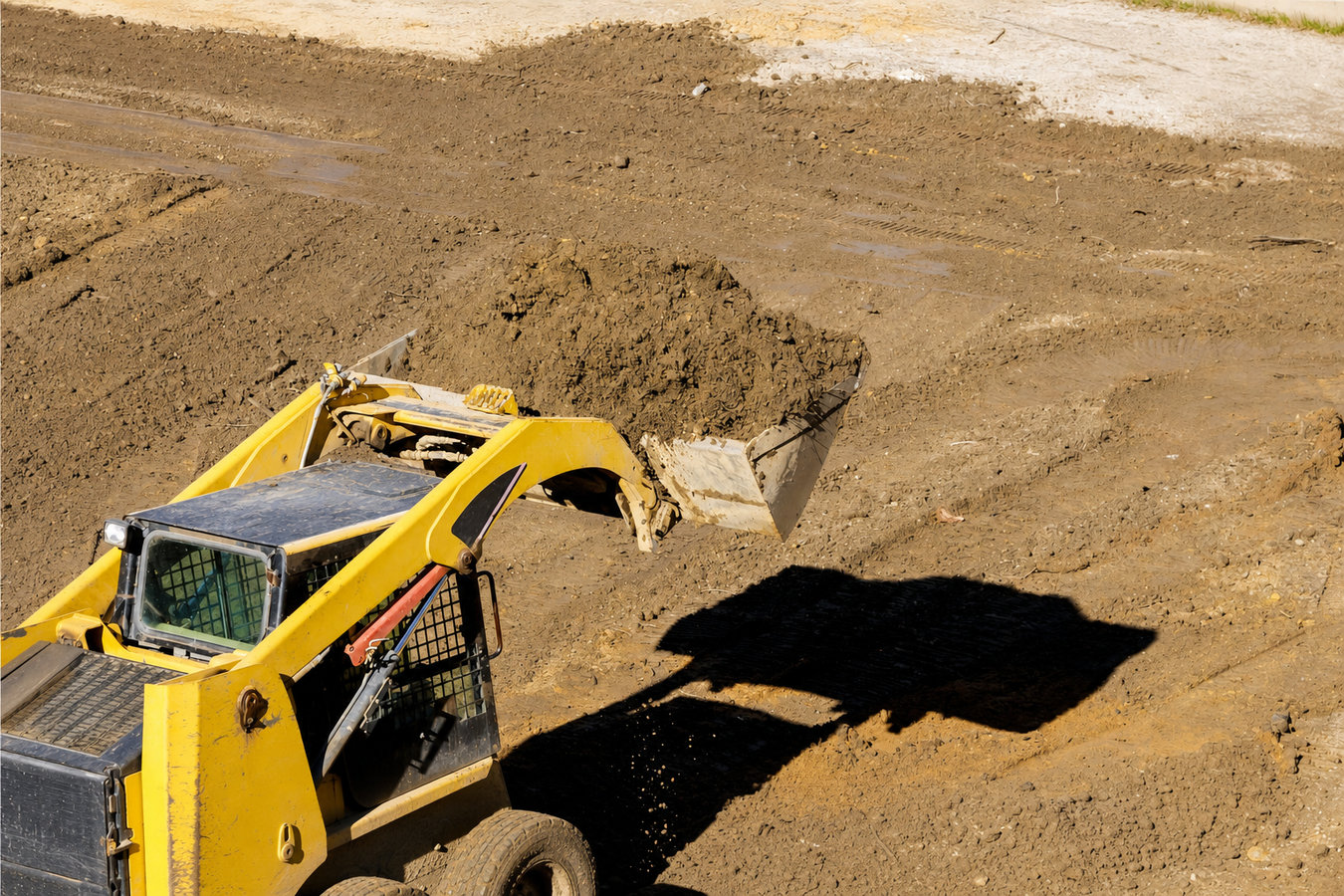
Asphalt is only as good as what sits under it. We build the base right the first time - proper depth, correct slope, real compaction - so your new driveway does not crack and sink in two years.
Grading and excavation in San Bernardino means removing existing material to the required depth, shaping the ground to the correct slope so water drains away from your home, and compacting the soil in layers to create a stable base - for a standard residential driveway, this phase typically takes one to two days before paving begins.
It is the step most homeowners never see, but it is the one that determines whether your driveway lasts a decade or starts cracking in a few years. Asphalt laid on a soft, poorly drained, or uneven base will fail no matter how thick it is. In San Bernardino, the clay-heavy soils that shift with every wet and dry cycle make this phase more important than in areas with more stable ground.
When a new driveway also needs curbing or edge work, our concrete curbing and sidewalks services can be coordinated at the same time so everything is built on the same prepared base.
If sections of your pavement have dropped lower than the surrounding surface or cracks are spreading across wide areas, the base beneath has likely shifted or settled. In San Bernardino, this is common with clay soils that move through every wet-dry cycle. Patching the surface without regrading is temporary at best.
Standing water after even a moderate rain is a clear sign the surface is not draining correctly. In the Inland Empire, where storms can arrive hard and fast after months of dry weather, pooling water accelerates pavement breakdown and can push moisture toward your foundation. Regrading corrects the slope so water moves where it should.
If you are adding a new driveway or paving a surface that is currently dirt or gravel, grading and excavation is the essential first step. No asphalt contractor can lay a lasting surface without first preparing the ground beneath it to the correct depth and slope.
If you have had the same areas patched more than once and the problems keep coming back, the issue is almost certainly in the base, not the surface. Patching without addressing the underlying grade or soil movement is money spent without solving the real problem.
We assess the soil on your specific site before any digging begins, because San Bernardino clay behaves differently from sandy or rocky ground and a one-size-fits-all depth is a shortcut. Our crew uses proper heavy equipment - excavators, compactors, and dump trucks - to remove existing material to the required depth, shape the ground to a slope that drains decisively away from your home, and compact the native soil in layers before the aggregate base goes in. We also handle permit applications when required so there are no surprises at closing time if you ever sell the property.
Once the base is ready, paving can begin - and we coordinate the two phases so your project moves in one continuous sequence. If your site also needs drainage improvements, our drainage solutions services can be incorporated during the grading phase, which is far more cost-effective than adding them later. New driveway edges or curbing can be paired with concrete curbing and sidewalks work while the ground is already open.
Full excavation, slope setting, and base compaction for homeowners starting from scratch - dirt, gravel, or an old surface that needs to come out.
For driveways where repeated patching has not solved the problem, we excavate to stable ground, regrade, compact fresh aggregate, and pave over a base that will actually hold.
When water pools on an existing surface, regrading the base redirects runoff away from the structure and toward the street or a proper drainage outlet.
We break out and remove old concrete or deteriorated asphalt, haul it away, and leave the site clean and ready for base prep - old asphalt is often recyclable.
The San Bernardino Valley sits on soils that include expansive clays - material that swells when wet and shrinks when dry. This repeated movement is one of the most common reasons driveways and paved surfaces crack and sink in the Inland Empire, and it is a condition that differs meaningfully from areas with more stable sandy or rocky soils. A contractor who treats every site the same regardless of soil type is not accounting for the local conditions that will determine how long your pavement lasts. Proper excavation removes or stabilizes the problematic material before the base is built, so the finished surface has something genuinely stable to rest on.
Drainage is the other factor that sets San Bernardino apart. The city gets relatively little rain overall, but Inland Empire storms can arrive heavy and fast - and a poorly graded surface that holds water briefly can suffer damage quickly when that water soaks into clay-heavy ground and starts the expansion cycle. We serve homeowners across the city and in neighboring communities like Rialto and Redlands, where the same soil and weather conditions demand the same attention to base preparation.
We visit your property, assess soil conditions and the existing surface, measure the area, and give you a written estimate that covers both the grading and excavation work and the paving that follows. We reply within one business day.
If your project requires a permit, we handle the application and coordinate with the relevant city or county office. This step protects you if you ever refinance or sell - unpermitted grading work can surface as a complication during a real estate transaction.
The crew removes existing material to the required depth, calls for utility locates before digging, shapes the ground to the correct slope, and compacts the soil in layers. This phase typically takes one to two days for a standard residential driveway.
Once the base is graded and compacted - and any required inspection is passed - the asphalt paving phase begins. We walk the finished base with you before paving so you can see the drainage slope and ask questions before the first shovel of asphalt goes down.
We visit the property, assess the soil, and give you a clear written quote - no pressure, no guesswork. We reply within one business day.
We evaluate the specific soil conditions on your site before setting excavation depth. San Bernardino clay behaves differently from sandy ground, and a one-size-fits-all depth is a shortcut that shows up as cracking within a few years. The right depth for your lot is determined by what is actually there, not a standard number from another market.
A well-graded surface drains water away from your home every time it rains. We set the slope during the grading phase - not as an afterthought - so your finished driveway sheets water toward the street rather than pooling at your garage door or soaking toward your foundation.
We identify which permits apply to your address and handle the paperwork. Permitted work is inspected and on record, which protects you during a future home sale and confirms the base was built to a standard an inspector approved - not just our word for it. The National Asphalt Pavement Association outlines base preparation standards that align with what licensed California contractors are required to follow.
California requires contractors who do grading and paving work to hold a current state-issued license, verifiable through the Contractors State License Board. Ask for any contractor's license number before signing a contract and verify it online.
Grading and excavation done right is the reason some driveways last for decades while others need constant repairs. Investing in proper base preparation upfront is almost always cheaper than repairing or replacing pavement that failed too soon because the ground beneath it was never ready.
Curbing and edge work installed on the same prepared base saves time and ensures everything ties in correctly.
Learn MoreDrainage improvements added during the grading phase cost far less than retrofitting them after pavement is down.
Learn MoreCall or submit a request online today - we will assess your site and give you a written quote with no obligation.