Loading...
Serving San Bernardino, CA and surrounding areas. (840) 222-9031
Unsealed cracks let water in and grow fast in Inland Empire heat. Sealing them now costs far less than patching or repaving a driveway that has been ignored through another summer.
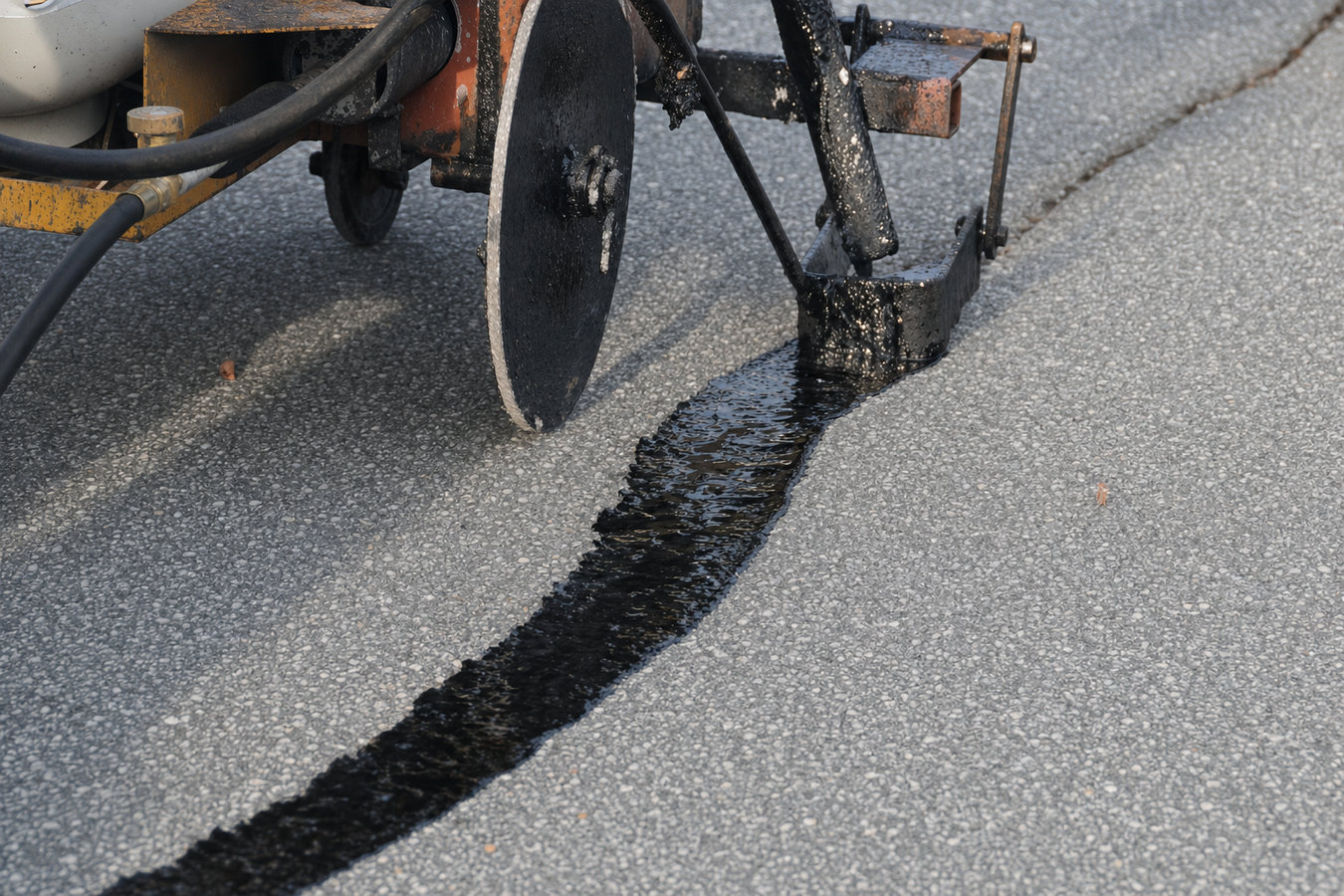
Asphalt crack sealing in San Bernardino means cleaning each crack, removing all loose debris and vegetation, and filling it with a flexible rubberized sealant that bonds to both sides - most residential driveway jobs are complete in a few hours.
Think of it as closing a small cut before it becomes a wound that needs stitches. Once a crack opens up, water gets underneath the asphalt and softens the base layer - and once the base starts to fail, you are looking at a patch or a full repave, not a simple seal. In San Bernardino, the daily cycle of intense heat and cooler nights is the main reason cracks form in the first place, and that same heat means cracks that go unaddressed can double in size within a single summer.
If your surface has moved beyond simple cracking into areas of crumbling or sunken pavement, our asphalt sealcoating and full repair services can address the deeper structural issues.
If you can see lines running lengthwise, across the width, or in irregular patterns on your driveway, water is already finding a way in. In San Bernardino, these cracks often appear after a long summer as the pavement contracts in the cooler months. If you can fit a coin in the crack, it is wide enough to be letting water reach the base.
When the edges of a crack begin to break apart and produce loose gravel or small chunks, the damage is actively spreading. Water has already been working its way in and the surrounding asphalt is weakening. Sealing now stops the progression before a simple crack becomes a pothole that needs full patching.
Fresh asphalt is dark black. When it turns light gray and feels rough or brittle underfoot, the surface has oxidized from sun and heat exposure - a very common condition in the Inland Empire. Oxidized asphalt cracks more easily, so this is exactly the right time to seal existing cracks and protect the surface before more appear.
Vegetation growing through a crack means the crack has been open long enough for soil and seeds to settle in. Roots will continue to widen the crack from below. This is a clear signal the crack has been ignored long enough and needs to be cleaned out and sealed before the root damage gets worse.
Every crack sealing job we do starts with thorough cleaning - blowing out each crack with compressed air, removing vegetation, and making sure the crack is fully dry before any sealant goes in. Skipping this step is the most common reason crack seals fail early, and we do not skip it. We use rubberized sealant formulated for high-heat flexibility, because San Bernardino asphalt expands and contracts more than pavement in cooler climates and a brittle sealant will not last. Once applied, the material is tooled flush with the surrounding surface so it sits level and looks clean.
Crack sealing works best as part of a regular maintenance plan. When the whole surface needs protection - not just individual cracks - we recommend pairing the sealing work with a full commercial asphalt paving assessment or a sealcoat application to restore the surface uniformly. If your driveway has wider damage or structural issues beyond cracking, our asphalt sealcoating and full repair services can address what crack sealing alone cannot fix.
Best for wider cracks and high-traffic areas - the heated rubberized material flows deep into the crack and bonds tightly to both sides as it cools.
Suited to smaller hairline cracks and situations where hot equipment is impractical - applied quickly and cures without heating equipment on site.
For wider, irregular cracks, a router first cuts a uniform channel - giving the sealant more surface area to bond to and a longer-lasting result.
We walk the entire surface before quoting, so you know whether sealing is the right solution or whether your driveway needs something more - no guessing.
San Bernardino sits at the edge of the Mojave Desert with summer temperatures regularly climbing well above 100 degrees. That extreme heat causes asphalt to soften and expand during the day, then contract at night as it cools - a daily cycle that is the primary reason cracks form and grow here. On top of that, the intense year-round UV exposure from the Inland Empire sun breaks down the asphalt binder faster than in coastal California, making the surface brittle and prone to new cracking much sooner than homeowners expect. The rubberized sealant used here has to be flexible enough to move with the pavement through that daily heat cycle - a rigid material that works fine in a milder climate will crack out quickly in San Bernardino.
The valley floor soil is another local factor. Much of San Bernardino sits on alluvial and clay soils that expand when wet and shrink when dry, pushing up against the asphalt base from below and widening cracks that look minor on the surface. This is especially relevant after the occasional heavy winter rain events, when soil saturation can shift the base underneath seemingly stable pavement. Homeowners across Rialto and Highland face the same conditions, and we bring the same local knowledge to those jobs as we do throughout San Bernardino.
Describe what you are seeing - the number of cracks and roughly how long they are. We reply within one business day and schedule an on-site visit to see the surface in person.
We walk the entire surface and assess each crack - not just what is visible, but whether the base is still solid underneath. You get a written estimate that covers the work and the cost before anything is agreed to, with no pressure.
On the day of the job, the crew blows out each crack with compressed air, removes vegetation, and confirms the surface is dry. Sealant is then applied, worked into the crack fully, and tooled flush with the surrounding pavement.
Hot-pour sealant in San Bernardino generally firms up within one to two hours in warm conditions. Your contractor gives you the specific wait time based on the product and the weather that day. Once cured, no follow-up is needed.
Free written estimate, no obligation. We reply within one business day.
We use rubberized sealant specifically selected for high-temperature flexibility - because San Bernardino asphalt expands and contracts far more than pavement in cooler climates. A sealant that bonds well in mild weather may crack out here within one summer if it lacks the right flexibility rating.
The most common reason crack seals fail early is that the crack was not properly cleaned and dried first. We blow out each crack with compressed air and confirm it is free of debris before applying sealant - because a bond to a dirty crack is no bond at all.
California requires contractors doing this work to hold a state license, which you can verify online through the Contractors State License Board. We are fully licensed and will provide our number before you sign anything.
Crack sealing is a maintenance treatment, not a structural repair. If the base beneath your asphalt has failed, we will tell you that during the estimate visit rather than sealing over a problem that will return. You get a straight answer on whether sealing is the right call for your driveway.
The National Asphalt Pavement Association recognizes proper crack sealing as one of the most cost-effective maintenance treatments for asphalt surfaces. We follow industry best practices and apply that knowledge to every driveway we work on in San Bernardino and the Inland Empire.
Full-scale commercial paving for parking lots and access roads when crack sealing alone is not enough to restore a failing surface.
Learn MoreA protective sealcoat over the whole surface pairs well with crack sealing to give your driveway a uniform, refreshed look and UV protection.
Learn MoreSan Bernardino summers are hard on asphalt. The best time to protect your driveway is before peak heat, not after the damage has already spread.